Cizumab 100mg (Bevacizumab)
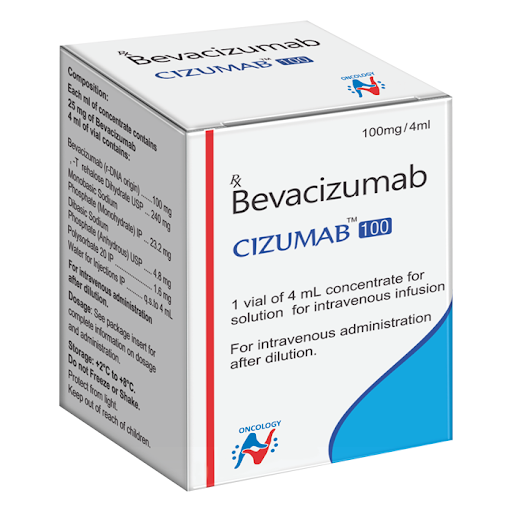
Cizumab is an antineoplastic agent based on bevacizumab, used for various malignant diseases. It is indicated for the treatment of colorectal cancer, non-small cell lung cancer, ovarian cancer, and cervical cancer. Bevacizumab is a monoclonal antibody that binds to and neutralizes VEGF (vascular endothelial growth factor), thereby inhibiting the formation of new blood vessels essential for tumor growth. The drug is administered intravenously in a hospital setting. Treatment requires continuous medical supervision due to the risks of gastrointestinal perforation, severe bleeding, and thromboembolic complications.
Cizumab is an antineoplastic agent whose active ingredient is bevacizumab. It belongs to the class of monoclonal antibodies and is used as part of targeted therapy for various malignant neoplasms.
MECHANISM OF ACTION
Bevacizumab is a recombinant human monoclonal antibody that specifically binds to vascular endothelial growth factor A (VEGF-A). By blocking VEGF, it prevents its interaction with receptors on the surface of endothelial cells, thereby inhibiting angiogenesis (formation of new blood vessels). This leads to regression of tumor vasculature, slowing tumor growth and metastasis.
INDICATIONS
- Metastatic colorectal cancer (in combination with chemotherapy)
- Locally advanced, recurrent, or metastatic non-small cell lung cancer
- Recurrent or therapy-resistant ovarian, fallopian tube, or primary peritoneal cancer
- Persistent, recurrent, or metastatic cervical cancer
IMPORTANT RISKS
Cizumab use is associated with an increased risk of:
- Gastrointestinal (GI) perforation
- Severe hemorrhage (including pulmonary and cerebral)
- Arterial and venous thromboembolic events (e.g., myocardial infarction, stroke, pulmonary embolism)
- Severe hypertension
- Impaired wound healing
Contraindicated in patients with active bleeding or GI perforation.
DOSING REGIMEN
The dose varies by indication but typically ranges from 5 to 15 mg/kg of body weight, administered intravenously every 2 or 3 weeks.
- First infusion: 90 minutes
- Subsequent infusions: 30–60 minutes if well tolerated
Pre-infusion hydration and blood pressure monitoring are mandatory.
CONTRAINDICATIONS
- Hypersensitivity to bevacizumab or any excipient
- Active bleeding of any origin
- Gastrointestinal perforation
- Severe, uncontrolled arterial hypertension
ADVERSE EFFECTS
Common: Hypertension, fatigue, headache, proteinuria, epistaxis, diarrhea, abdominal pain
Serious: GI perforation, thromboembolic events, impaired postoperative wound healing
SPECIAL WARNINGS AND PRECAUTIONS
- Therapy must be administered exclusively in specialized oncology centers.
- Before each infusion, blood pressure, renal function, and presence of bleeding must be assessed.
- Do not administer within 28 days after surgery.
- Contraindicated during pregnancy—may cause fetal developmental abnormalities.
STORAGE CONDITIONS
- Store infusion solution in a refrigerator at 2°C to 8°C.
- Do not freeze.
- Opened vials or prepared solutions may be used within 24 hours if stored refrigerated.
DISCLAIMER
Cizumab is a potent antineoplastic agent and should be used only under the supervision of an oncologist in a certified medical facility. The information provided on mhp.ooo is for reference purposes only and must not be construed as medical advice or a treatment guide. Self-treatment of oncological diseases is life-threatening.
| Brand name | Cizumab |
| Active substance | Bevacizumab |
| Manufacturer | Hetero Drugs Ltd. |
There are no comments yet
 Lefumide 20mg